
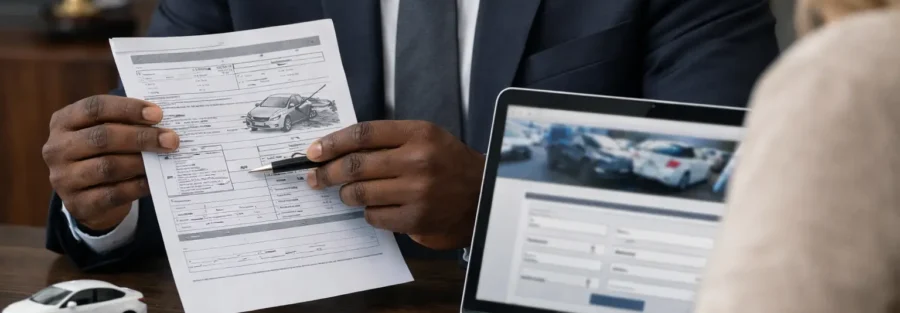
The minutes after a Michigan crash can feel like a blur: flashing lights, pain you may not feel until later, a damaged car, and an insurance company already looking for answers. Getting your Michigan accident report online is one practical step that can help you regain control. But do not mistake the report for the whole story. It is a starting point for protecting your health, your rights, and your claim.
For an injured driver, passenger, pedestrian, or family member, that distinction matters. Insurance companies scrutinize every detail when money is on the line. They may point to an incomplete narrative, a checked box, or a missing fact as a reason to minimize what happened. Your job is not to fight that battle alone. Your job is to get medical care, preserve what you can, and avoid letting bad information become the insurer’s version of events.
How to Get a Michigan Accident Report Online
Most police-reported vehicle crashes in Michigan generate a Traffic Crash Report, commonly called a UD-10. The report is usually available through the Michigan State Police’s online crash report purchasing system. You will generally need basic identifying details, such as the date of the crash, the county or city where it happened, and the name of a driver involved. If you have an incident number or report number from the officer, keep it handy. It can make the search easier.
There is usually a processing period before a report appears online. A report may take days or longer to be submitted, reviewed, and entered into the system. If your search comes up empty right away, do not assume no report exists. Try again later, contact the law enforcement agency that responded, or ask whether the crash was handled by a local department, sheriff’s office, or the Michigan State Police.
Not every crash will be available through the same path. A collision on private property, a minor incident where police did not respond, or an event documented by a local agency may require you to request records directly from that agency. Some departments have their own records process and fees. Keep copies of every receipt and document you obtain.
If the crash involved injury, death, or significant property damage, Michigan law generally requires a report to law enforcement. Still, do not rely on assumptions. If you were too hurt or shaken up to speak clearly at the scene, tell your lawyer or the investigating agency what happened as soon as you can.
What to Look for When the Report Arrives
Read the report carefully from top to bottom. Confirm the basics first: your name, address, vehicle, insurance information, date, time, roadway, direction of travel, and the names of all people involved. A wrong digit in a license plate or a misspelled name may look minor, but it can create headaches when records need to be matched later.
Then review the accident narrative, diagram, driver statements, witness information, citations, listed injuries, and contributing circumstances. Look for missing passengers, incorrect lane positions, a wrong traffic signal description, or an inaccurate statement about speed, weather, visibility, or impact points.
You should also understand what a crash report cannot do. The officer usually arrives after the collision. The narrative may rely on brief statements from people who are scared, injured, confused, or protecting themselves. A report can be useful evidence, but it is not the final word on fault. It also does not capture the full cost of your injuries, including future treatment, lost earning capacity, daily pain, or the ways a serious injury changes your home life.
That is where insurance companies often play hardball. They may treat a shorthand report as if it answers every question, especially if its wording helps them. Do not let a carrier pressure you into agreeing with a report you have not read or a version of events that does not reflect the facts.
What to Do If the Report Has an Error
A police report is not always easy to change, and the right approach depends on the error. Clerical mistakes, such as a wrong address or vehicle description, may be corrected through the agency’s records unit. More disputed facts, such as who had the green light or how the vehicles collided, are different. An officer may decline to alter a completed report based solely on a later disagreement.
That does not mean you are stuck. Preserve proof that supports your account. Save photos and videos from the scene, damaged vehicle photos, dash camera footage, text messages about the crash, and the names and contact information of witnesses. Write down what you remember while details are still fresh, including what each driver said, where vehicles came to rest, the road conditions, and whether nearby businesses or homes may have cameras.
If you believe a factual correction is warranted, contact the reporting agency promptly and ask about its procedure. Be calm, specific, and truthful. Do not guess or exaggerate. Ask whether you may submit a written statement or supporting evidence for the file. Keep a copy of anything you provide and note who you spoke with and when.
For a serious injury claim, an attorney can evaluate more than the report itself. Vehicle damage, electronic vehicle data, phone records, surveillance footage, witness interviews, roadway design, and medical records can all matter. A report may say one thing while the larger evidence picture tells another.
Do Not Wait on Medical Care or Evidence
Waiting for a report should never delay treatment. Adrenaline can hide symptoms after a crash. Neck pain, headaches, back injuries, concussions, and soft-tissue damage may become more obvious over the next day or two. Get evaluated when you need care, follow medical instructions, and be honest about every symptom and limitation.
Medical documentation connects the collision to the harm you are living with. That connection is often attacked by insurers, particularly when there is a gap in treatment or an injured person tries to push through pain without seeing a doctor. Seeking care is not overreacting. It is taking your health seriously and creating a truthful record of what the crash did to you.
At the same time, protect evidence that could disappear. Request that your vehicle not be repaired, sold, or destroyed until it has been properly documented if fault or the severity of impact is disputed. Save the damaged personal items from the crash when practical. Back up photos and videos to a secure location. If there may be security footage nearby, act quickly because many systems overwrite recordings within days.
Be Careful With the Insurance Company’s Questions
Once an insurer has the crash report, expect contact. The adjuster may sound helpful. They may also ask questions designed to narrow your claim before you understand your injuries or have the full report. You are not required to give the at-fault driver’s insurer a recorded statement just because it requests one.
Stick to the facts, and do not speculate about blame, medical recovery, or what you might need in the future. Avoid saying you are “fine” simply because you are trying to be polite. Do not sign a broad medical authorization or accept a quick settlement before you know the diagnosis, treatment plan, and real financial impact of the crash.
Michigan’s no-fault rules, available benefits, and deadlines can be complicated, particularly when injuries are serious or multiple insurance policies are involved. The report helps identify parties and insurers, but it does not replace a careful review of your circumstances. A claim can involve medical expenses, wage loss, replacement services, vehicle damage, and potentially a claim against the driver who caused the crash.
Turn the Report Into a Stronger Claim File
Think of the accident report as one folder in a larger case file. Put it with your photographs, medical records, bills, work-loss information, repair estimates, witness details, and a journal of symptoms and missed activities. Organization makes it harder for an insurer to pretend there is no proof of what happened.
If you were hurt because another driver, property owner, or other responsible party acted carelessly, you deserve more than a claim number and a rushed offer. Call Camper can review the crash report, investigate the evidence around it, and handle insurance pressure while you focus on healing. There are no upfront attorney fees, and a free case evaluation can give you a clear next step.
A report may be only a few pages, but the injury behind it can affect your life for months or years. Get the record, read it closely, protect the evidence that fills in the gaps, and do not let Big Insurance write the ending to your story.