
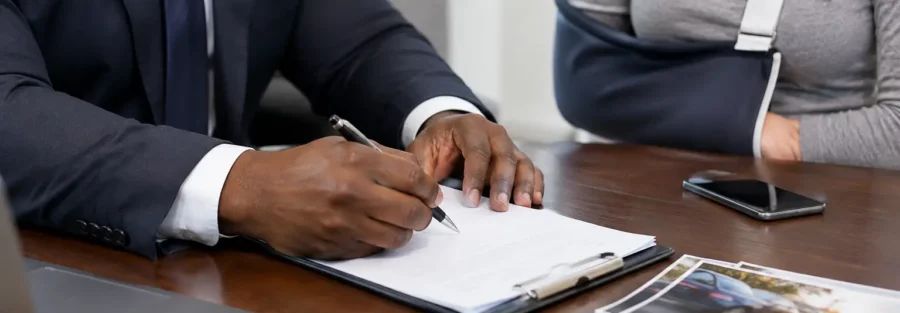
The crash may last seconds. The pain, missed work, medical appointments, and insurance pressure can last months. Knowing how to document crash injuries gives your claim a foundation before an insurance company gets the chance to minimize what happened to you.
Insurance adjusters are not there to tell your story for you. They look for gaps: a delay in treatment, an injury not mentioned at the first appointment, a missing work record, or a casual comment that you are “feeling fine.” Those gaps do not mean you were not hurt. But they can give Big Insurance an opening to argue that your injuries were minor, unrelated, or already healed.
You do not have to build a perfect legal case from your hospital bed. You do need to take your health seriously, keep records as you go, and avoid letting an insurer control the narrative.
Why document crash injuries right away?
A car crash can cause more than visible cuts and bruises. Neck and back injuries, concussions, shoulder damage, soft-tissue injuries, and psychological trauma may worsen or become clearer over the following days. Adrenaline can hide pain immediately after a collision. That is one reason people sometimes decline care at the scene, then wake up the next morning unable to turn their head or get out of bed comfortably.
Prompt documentation connects the symptoms you experience to the collision. It also creates a timeline that is harder for an insurer to distort. The closer your medical records, photos, and personal notes are to the crash, the more clearly they show what your life looked like before and after someone else’s negligence changed it.
In Michigan, a crash claim may involve medical expenses, wage loss, replacement services, pain and suffering, and other losses depending on the facts. The right claim and available coverage depend on the collision, the vehicles involved, your insurance, and the extent of your injuries. Documentation helps identify the full picture instead of reducing your case to one emergency room bill.
Get medical attention and describe every symptom
Your health comes first. If you have severe pain, numbness, weakness, confusion, trouble breathing, loss of consciousness, or other alarming symptoms, seek emergency care immediately. Even when symptoms seem manageable, it is wise to be evaluated promptly after a crash.
At the appointment, be honest and specific. Tell the provider about every area that hurts, what movements are difficult, whether you have headaches, dizziness, sleep problems, anxiety, or changes in concentration. Do not downplay symptoms because you do not want to complain. You are not being dramatic by giving your doctor accurate information.
This matters because medical records often become the first documents an insurance company reviews. If your shoulder pain, headaches, or numbness were not discussed early on, an adjuster may later claim those complaints came from something else. That argument is not always fair or correct, but it is easier to fight when your records consistently reflect what you were dealing with.
Follow the treatment plan your medical providers recommend, as long as it is appropriate for you. Missed appointments happen, especially when you are juggling work, child care, transportation, and pain. If you must miss one, reschedule it. A long unexplained treatment gap can become another talking point for an insurer trying to discount your claim.
Keep copies of every medical record
Create one folder, paper or digital, for crash-related documents. Save discharge instructions, imaging results, prescriptions, referral paperwork, therapy notes, medical bills, explanation-of-benefits statements, and receipts for braces, medication, crutches, or other supplies.
Do not assume every provider will have every record or that an insurance company will gather and interpret them fairly. Keep your own copy whenever possible. A complete record shows the ongoing work of recovery, not just the first day of treatment.
Photograph what the crash changed
Photos can preserve details that disappear fast. Vehicle damage gets repaired. Bruises fade. Swelling goes down. A cast comes off. Take clear photographs as soon as you safely can, then continue taking them as injuries develop or heal.
Photograph visible injuries from more than one angle and in good lighting. If you have a damaged vehicle, photograph the exterior, interior, deployed airbags, broken glass, child seats, and any objects that moved during impact. Save pictures of the crash scene if you have them, including road conditions, traffic controls, skid marks, and the position of the vehicles.
Do not edit images or add filters. Keep the original files, which may retain date and time information. If a family member takes pictures because your injuries make it difficult, ask them to send you the original files as well.
Photos are not a substitute for medical evidence. A photograph of a bruise cannot show the full extent of pain, nerve damage, or limitations. But paired with treatment records and your own account, it can make the human impact of the collision harder to ignore.
Use a daily injury journal
Medical charts are essential, but they may not capture what injury does to ordinary life. A daily journal can fill in that missing context. Write short notes, even if all you have energy for is a few sentences.
Record your pain level, symptoms, medications, sleep quality, appointments, and activities you could not complete. Note practical details: needing help getting dressed, missing your child’s game, being unable to lift groceries, struggling through a shift, or giving up hobbies that once helped you feel like yourself.
Be truthful. A journal is not a place to exaggerate, and it should not read like a performance. Some days may be better than others. Document those days too. Honest, consistent notes are more credible than a record that claims every moment was unbearable.
If your injury affects your mental health, include that as well. Fear of driving, panic at intersections, depression, irritability, nightmares, and frustration with lost independence are real consequences of a serious crash. Tell your medical provider about them, not just your journal.
Protect evidence of lost income and daily costs
A crash can hurt your finances long before a claim is resolved. Save pay stubs from before and after the collision, employer attendance records, missed-work notices, disability forms, and any written work restrictions from your doctor. If you are self-employed, preserve canceled jobs, invoices, calendar entries, client messages, and other proof of lost business.
Also keep receipts for transportation to appointments, parking, household help, home modifications, and other out-of-pocket costs. Not every expense will be recoverable in every case, but throwing away proof guarantees it will be harder to evaluate.
If family members help you with household tasks, write down what changed. In Michigan, replacement services can matter when injuries prevent you from handling everyday work such as cooking, cleaning, laundry, yard work, or caring for children.
Be careful with insurance conversations and social media
You may need to report the crash to your own insurer, but you do not have to give the other driver’s insurance company a detailed recorded statement before you understand your rights. Adjusters often sound friendly because they want information quickly. Their job is still to protect the company’s money.
Do not guess about fault, speed, injuries, or future recovery. Do not accept a quick settlement just because bills are arriving. Once you sign a release, you may give up the right to pursue more compensation even if your condition becomes worse.
Social media can create problems too. A smiling photo at a family event does not prove you are uninjured, but insurers may try to use it that way. Consider limiting what you post while your claim is pending, and ask friends and family not to tag you in public posts about the crash or your activities.
When documentation becomes a legal fight
Good records give your lawyer something solid to work with. They help show the collision, the medical harm, the treatment you needed, the work you missed, and the ways your daily life changed. They also help identify missing information early, before an insurance company uses that absence against you.
At Call Camper, we do the heavy lifting: investigating the crash, preserving evidence, organizing medical documentation, and pushing back when insurers try to treat an injured person like a claim number. You should be focused on getting better, not on outmaneuvering an adjuster.
Start where you are. Save the paperwork. Take the photos. Go to the appointment. Write down what hurts and what you can no longer do. Then get a free case evaluation before Big Insurance decides your story is worth less than it is.