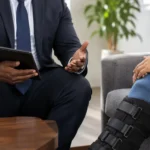

The first conversation after an accident can shape everything that follows. You may be hurting, missing work, staring at medical bills, and getting calls from an insurance adjuster who wants answers before you have had time to breathe. Knowing the best questions for injury consultation helps you take back some control. A free consultation is not just a chance for a lawyer to assess your claim. It is your chance to find out who will protect your story and who is prepared to stand up to the insurance company.
You do not need legal training or a perfect memory to ask the right things. Bring what you have, be honest about what happened, and do not let fear of saying the wrong thing keep you from getting help.
What should I bring to an injury consultation?
Bring any documents or information you already have, but do not delay a consultation because your file is incomplete. A police report, crash photos, insurance letters, medical records, discharge paperwork, witness names, damaged-property photos, and pay stubs can all help a lawyer begin evaluating the case.
Your own account matters just as much. Write down what you remember about the incident, how your injuries have affected daily life, and every provider you have seen. Details fade quickly after a crash, dog attack, or fall. A few notes can preserve the facts that make your claim real.
Best questions for injury consultation meetings
A good injury lawyer should give you straight answers, not a sales pitch. These questions can help you understand the strength of your claim, the work ahead, and whether the firm will treat you like a person rather than a claim number.
1. Do I have a case, and what facts matter most?
Ask the lawyer to explain what must be proven and which facts may support or complicate your claim. In a negligence case, the central issues often include who caused the incident, whether that person or business acted unreasonably, and how the injury has affected you.
This is also the time to ask about possible defenses. Maybe the other driver claims you were partly at fault. Maybe a property owner says the dangerous condition was obvious. A lawyer who is honest about the challenges is more valuable than one who promises an easy win before investigating the evidence.
2. What evidence should we preserve right now?
Evidence can disappear with surprising speed. Security camera footage may be erased, vehicles may be repaired, witnesses may become difficult to locate, and a hazardous condition may be cleaned up after a fall. Ask what should be preserved immediately and whether the law firm will send notices, locate footage, inspect the scene, or speak with witnesses.
Do not assume the insurance company is gathering evidence for your benefit. Its goal is often to limit what it pays. Your legal team should be thinking early about what proves fault and what shows the full impact of your injuries.
3. Should I talk to the insurance adjuster or give a recorded statement?
This question deserves a clear answer before you say much to anyone representing the other side. Adjusters may sound friendly, but their employer has a financial interest in reducing or denying your claim. A recorded statement can be picked apart later, especially when you are in pain, medicated, or still learning the extent of your injuries.
Ask whether the lawyer will handle insurance communications for you. Having someone take those calls off your plate can protect your claim and give you room to focus on treatment.
4. What compensation could apply to my situation?
A personal injury claim is about more than the first emergency room bill. Ask the attorney to explain the categories of losses that could be considered in your case. Depending on the facts, that may include medical expenses, future treatment needs, lost wages, reduced ability to earn a living, pain, emotional distress, and damage to your vehicle or other property.
No responsible lawyer can guarantee a dollar amount at an initial meeting. The value depends on medical proof, available insurance coverage, fault, the long-term effect of the injury, and many other facts. Still, the lawyer should explain how they will document the losses that insurers often try to minimize.
5. How will you prove the full extent of my injuries?
Some injuries are obvious on an X-ray. Others, including soft-tissue injuries, traumatic brain injuries, chronic pain, and psychological harm, may require time and careful medical documentation. Ask how the firm approaches a case when symptoms develop later or recovery does not go as planned.
You should also ask whether you should continue following your medical providers’ recommendations. Gaps in treatment can give an insurer room to argue that you were not seriously hurt. That does not mean you should undergo care you do not need. It means your treatment decisions and records should accurately reflect what you are living through.
6. What deadlines apply to my claim?
Michigan injury claims can involve deadlines, notice rules, and insurance requirements that vary based on how and where the incident happened. Claims involving government entities, uninsured or underinsured motorist coverage, and certain benefits may require especially fast action.
Ask what deadlines may apply to your specific case and what the firm will do to protect them. Waiting too long can damage a claim even when the other party was clearly at fault. The sooner an attorney can review the facts, the more options you may have.
7. Who will handle my case day to day?
You deserve to know whether you will speak with an attorney, a case manager, or several people throughout the process. Ask who your point of contact will be, how often you can expect updates, and how quickly the office generally responds to calls or messages.
Personal attention is not a small issue. Injury claims can take time, and you should not be left wondering whether anyone is working on your case. Look for a team that listens, explains what is happening in plain language, and returns your calls when questions arise.
8. How do attorney fees and case costs work?
A contingency-fee arrangement generally means you do not pay attorney fees upfront and the lawyer is paid only if the case is successfully resolved. But you should still ask for a clear explanation of the fee percentage, case expenses, and what happens if there is no recovery.
There is no reason to feel awkward asking about money. A trustworthy firm will explain the agreement before you sign it. You need to understand how the arrangement works so you can make a decision without surprises.
9. Will you negotiate, file suit, and take my case to trial if needed?
Many injury claims settle, but an insurer is more likely to take a claim seriously when it knows the injured person has counsel willing to prepare the case for litigation. Ask how the firm decides whether an offer is fair and what happens if negotiations stall.
Trial is not automatically the right path. It can take longer and carries risk. But a lawyer should be ready to use it when an insurer refuses to recognize the harm it caused. You want an advocate who will not pressure you into accepting less simply because the insurance company is being difficult.
Questions you should expect the lawyer to ask you
The consultation should be a real conversation. Expect questions about how the incident occurred, prior injuries, medical care, work history, insurance coverage, witnesses, and whether you have spoken with adjusters. Answer honestly, even when a fact feels uncomfortable. Hidden facts do not disappear. They become harder to manage when the other side finds them first.
You should also be asked how the injury has changed your life. Can you sleep? Drive? Lift your child? Return to work? Enjoy the activities that mattered to you? Those answers help show the human cost behind a stack of medical records.
A consultation should leave you clearer, not pressured
After the meeting, you should understand the next step, what information is still needed, and how the firm plans to protect your claim. If you leave feeling rushed, talked over, or pushed to settle before anyone has investigated, trust that instinct.
At Call Camper, the point of a free case evaluation is simple: give injured people a place to be heard and a team ready to do the heavy lifting. Bring your questions, bring your documents if you have them, and bring the truth about what this injury has taken from you. You do not have to face Big Insurance alone.